Vietnam Legalizes Crypto -- 17 Million Users Come Out of the Shadows
In January 2026, Vietnam's Digital Technology Industry Law took effect, giving legal status to crypto assets. The world's fifth-largest crypto market finally has rules.
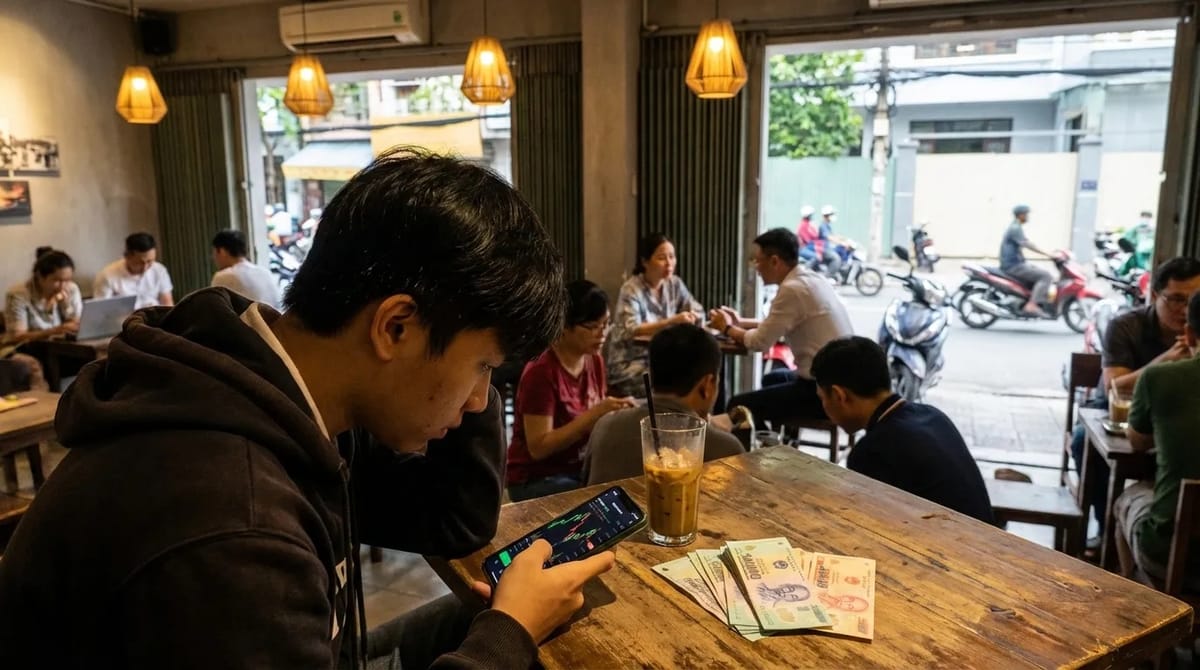
In January, Vietnam's Digital Technology Industry Law took effect. Bitcoin, Ethereum, and other crypto assets now have legal standing.
This may sound like dry regulatory news. But it touches a massive underground market.
About 17 million Vietnamese hold crypto assets -- over 20% of the population, ranking fifth globally.
For years, these people bought, sold, held, and even inherited crypto with zero legal protection.
Now, the rules have arrived.
From Gray Zone to Formal Legislation
Vietnamese have been active in crypto for years.
According to blockchain analytics firm Chainalysis, Vietnam has consistently ranked among the top countries on the Global Crypto Adoption Index -- fifth in 2024, behind India, Nigeria, Indonesia, and the United States.
But legally, crypto sat in a gray zone: not illegal, not legal.
The State Bank of Vietnam made clear that crypto was not a lawful means of payment, but holding it was not a crime.
The result: the market operated anyway, but investors had almost no legal recourse when things went wrong.
In June 2025, the National Assembly passed the Digital Technology Industry Law with 441 votes in favor and 4 against, bringing crypto assets into a formal legal framework.
Vietnam became the 46th country to legalize crypto assets.
How Does the Law Define Crypto?
The new law splits digital assets into two categories:
"Virtual assets" are digital assets used for exchange or investment -- things like game tokens and loyalty points. "Crypto assets" are digital assets verified through cryptographic technology, such as Bitcoin and Ethereum.
Neither category includes securities, digital forms of fiat currency, or central bank digital currencies. In other words, stablecoins and CBDCs fall outside this law.
The most important change: crypto assets are now classified as "property." They can be owned, traded, and inherited, protected under civil law. But they are still not legal tender. You cannot use Bitcoin to pay at a convenience store.
Sky-High Exchange Requirements: USD 380 Million Minimum
With the legal foundation in place, the government launched a five-year crypto exchange pilot program in September 2025.
The barriers to entry are steep: minimum paid-in capital of 10 trillion VND (about USD 380 million), with at least 65% held by domestic institutions. Foreign ownership is capped at 49%.
Only five exchanges will be licensed during the pilot. All transactions must be settled in VND.
These conditions make clear that Vietnam intends to keep exchanges firmly in the hands of domestic financial institutions.
The first to secure a spot was Military Bank (MB Bank). In August 2025, the defense-linked bank signed a partnership with South Korea's Dunamu, operator of Upbit -- one of the world's top five crypto exchanges. MB Bank handles domestic compliance and client relations; Dunamu provides technology and back-end systems.
Why Now? Pressure From FATF
Vietnam's urgency to regulate crypto is not just about taming a large market. There is a more direct reason: international pressure.
In 2023, the Financial Action Task Force (FATF) placed Vietnam on its "gray list," flagging serious deficiencies in anti-money laundering controls. One of the issues FATF cited was the lack of regulation over virtual asset service providers.
Being gray-listed has real consequences. Foreign banks and financial institutions face stricter due diligence requirements when dealing with Vietnam, raising transaction costs and potentially blocking cooperation. For an economy that depends heavily on foreign investment, the pressure is significant.
The new law requires all crypto-related businesses to comply with anti-money laundering and counter-terrorism financing rules. Strict exchange licensing and identity verification requirements are all designed to show FATF that Vietnam can manage this market.
Taxes? Still Under Discussion
The law passed, but tax details are still being drafted.
The Ministry of Finance has proposed a 0.1% transfer tax on each crypto transaction, matching the current securities transaction tax rate. This is still a draft -- nothing is final.
For long-term holders, questions remain: how to determine cost basis, how to handle cross-border transactions. None of these technical details have been settled.
A Market Worth Over USD 100 Billion
Vietnam's crypto market is not small.
Between 2024 and 2025, on-chain transaction volume in Vietnam exceeded USD 200 billion.
Multiple research firms estimate the market's revenue will reach several billion dollars in 2026.
The government is also building broader blockchain infrastructure.
In 2024, it established the Vietnam Blockchain and AI Innovation Academy, aiming to train one million people.
The national blockchain platform NDAChain has 49 validator nodes, jointly managed by government agencies and major enterprises. It is set to expand to local governments and universities in 2026.
After Legalization
Vietnam recognizes crypto as property, not currency. You can legally hold and trade it, but you cannot use it for payments.
This differs from El Salvador's aggressive approach of making Bitcoin legal tender -- a policy El Salvador reversed in early 2025 under IMF pressure.
The bottom line: acknowledge the market exists, but keep it within the financial regulatory perimeter.
For Vietnam's 17 million crypto holders, the biggest change is legal protection.
In the past, if you were scammed or an exchange disappeared, you had almost nowhere to turn. Now, at least, there is a legal basis for recourse.
But new rules also mean new constraints. Once the first compliant exchange goes live, all users will have six months to migrate assets to licensed platforms. Those accustomed to trading on offshore exchanges may need to adjust.
The real test ahead: whether this framework helps Vietnam get off the FATF gray list.
If you found this article useful, feel free to share it with anyone interested in Vietnam.
Want regular updates on Vietnam? Visit our website to subscribe to our free newsletter.
We also have a LINE group for readers -- join link is in our Facebook page bio. Come chat about all things Vietnam.