After Vietnam's Massive Administrative Merger, Google Maps Is Finally Updating
Vietnam merged 63 provinces into 34 over half a year ago. Google Maps is finally starting to update place names in mid-February.
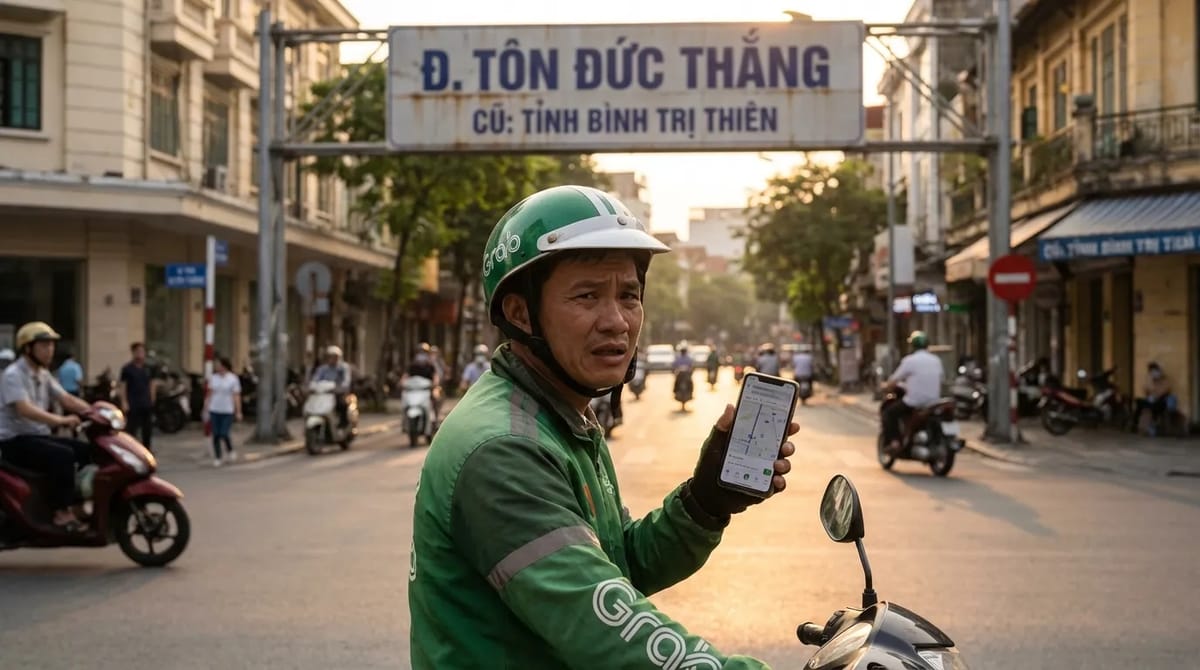
Last July, Vietnam completed the largest administrative restructuring in its modern history: the country went from 63 provinces and cities down to 34, eliminated the district level of government, and adopted a three-tier system of central, provincial, and communal administration.
Nearly half the provinces were cut in one stroke. Tens of thousands of civil servants were reassigned. The speed caught many off guard.
More than six months later, government documents use the new names and highway boundary markers have been swapped out. But open Google Maps and you still see the old Vietnam.
Why Google Maps took so long
According to technical documents on Google Maps Platform's IssueTracker, Google is expected to begin adjusting Vietnam's address recognition and classification system no earlier than mid-February 2026.
The delay is not hard to understand.
The scale of Vietnam's changes was enormous: 34 provincial-level units and over 3,300 commune-level units were renamed or merged.
Google Maps is a global platform. Every place name connects to search, navigation, address autocomplete, and a whole stack of algorithms.
Mapping old names to new ones while making sure other countries' data is unaffected takes time.
Vietnamese navigation company Vietmap moved much faster — on July 1, the day the new system took effect, their Vietmap Live app had already updated all 34 provinces and 3,300-plus communes, complete with an old-to-new name lookup feature.
When you only serve one country, the burden is entirely different.
Six months of address chaos
The past six-plus months have been rough for Vietnamese users.
The most direct impact was on logistics.
Delivery drivers and couriers rely on Google Maps for navigation, but the map still showed old names.
Customers filled in new addresses that the map could not find. Drivers had to call to confirm, adding several minutes per trip.
Some logistics companies (GHN, GHTK, VNPost) also failed to update their systems in time, and one- to two-day delays became routine.
E-commerce platforms were hit too.
With provincial boundaries shifting, logistics firms needed to update map systems, delivery databases, and automated routing algorithms. Address standardization became a major challenge.
Another common frustration: the names on the map did not match what locals actually said.
Tuoi Tre reported that delivery drivers would see one name on the map while residents still used the old name in conversation. Both sides often needed multiple rounds of confirmation to find the right location.
How the update will roll out
According to the technical document on Google Maps Platform IssueTracker (Issue #428879632), the target date is February 17, 2026, with the update rolling out in four phases.
Google emphasized that this update will not change geographic locations or administrative boundaries. It adjusts how the internal system classifies place names.
Specifically: old districts and towns (Quan, Huyen, Thi xa) will be removed from search results, and communes and wards (Xa, Phuong) will be reclassified to a higher level.
These changes will be applied sequentially to the Geocoding API, address autocomplete, and street addresses, with full completion expected within several weeks.
The timing for phase four has not been set.
For regular users, search results may show a mix of old and new names during the transition, and navigation suggestions may be less smooth.
Google also noted that February 17 is a target date — technical issues could cause delays.
Should businesses rush to change their addresses?
If you have a company registered in Vietnam, do not panic.
Vietnam's Ministry of Finance issued a notice last April (No. 4370/BTC-DNTN): businesses and sole proprietors can keep using their old licenses and do not need to update addresses just because of the restructuring.
You only need to update when you are changing other information on your license.
The issuing authority also cannot force you to re-register solely due to the merger.
According to the notice, old addresses printed on invoices and contracts are not considered incorrect.
But tax authorities have already updated enterprise addresses to reflect the new administrative divisions. There may be a gap between the old address on your registration and the new one in the tax system, so proactively updating is advisable in the long run.
The update is free and takes three business days through the online system (dangkykinhdoanh.gov.vn).
What businesses in Vietnam should watch for
In the short term, a few things to keep in mind: review address clauses in logistics contracts, warehouse locations and delivery routes may need replanning, and if employees' work permits or residence documents happen to be up for renewal, use the new addresses.
In the long run, the merger aims to break down the old administrative barriers between provinces.
Take HCMC as an example: after merging with Binh Duong and Ba Ria-Vung Tau provinces, logistics from factory to port can now happen within a single administrative unit, and approval processes should theoretically speed up.
But theory is theory.
Whether the new structure actually improves efficiency depends on ground-level execution.
Maps can be redrawn. Changing people's habits takes longer.
The policy information mentioned in this article (such as Notice 4370, the license exemption, etc.) is based on currently available official documents.
Local government implementation may differ from central policy. It is advisable to confirm the latest rules with the relevant local authority before proceeding with any formalities.