Leaving the West, Returning to Where Their Parents Left: The Viet Kieu Reverse Migration
Every year, 500,000 Vietnamese return from overseas. Some 25,000 choose to stay. Raised in the West, they are going back to the country their parents fled.
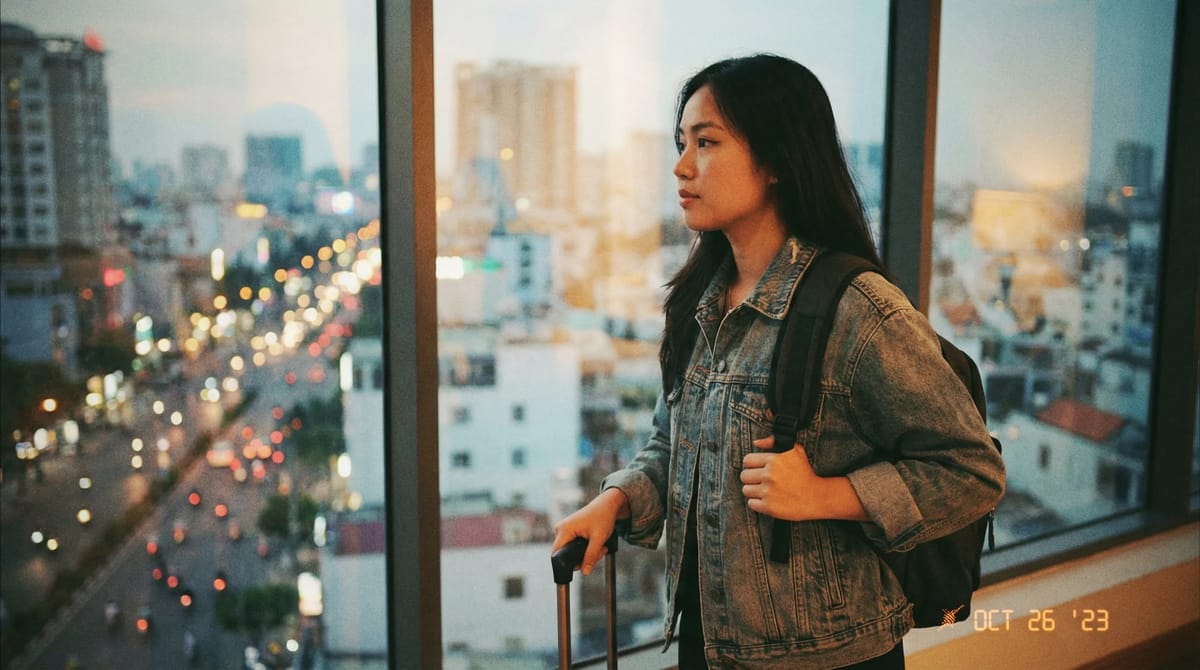
Every year, 500,000 Vietnamese return from overseas. Of those, 25,000 choose to stay.
They are not tourists, and they are not just visiting family. They are reverse migrants -- raised and educated abroad, now choosing to start over in Vietnam.
Eight Years in Canada, Still Feeling Like an Outsider
Minh Tam is 30. She spent eight years in Canada, holding a steady university research job and working weekends at a mall to supplement her income.
Life was not bad. But something was always missing.
"It was lonely. Every day felt the same," she said.
During a visit to Vietnam in 2023, the moment her plane touched down at Hanoi's Noi Bai Airport, a rush of emotion hit her. That night, she dreamed her parents were crying, begging her to stay.
She woke up, looked at the flame trees outside the window, and made her decision. In Vietnam, flame trees are called "student flowers" -- symbols of farewell and youth.
Mistaken for Homeless in America
Nguyen Thi Huong is a retired nurse. She lived in California and spent time in Australia.
In the United States, she always felt marginalized. Once, a stranger on the street mistook her for a homeless person.
"That feeling is hard to describe."
She moved back to Vietnam and divided her family home in two -- one half for herself, the other rented to a noodle soup shop. Now she hears the vendor's calls through the wall every day. Life, she says, finally has weight.
Six Million Diaspora, Billions in Remittances
According to Vietnam's Ministry of Foreign Affairs, six million Vietnamese live in over 130 countries.
In 2024, they sent home over USD 16 billion in remittances -- a record high. HCMC alone received nearly USD 10 billion, accounting for 60% of the national total.
Most of this money used to go toward household spending. In recent years, it has increasingly flowed into investment, startups, real estate, and education.
Viet Kieu Power the Startup Scene
In Vietnam's startup ecosystem, the diaspora punches above its weight.
According to 500 Startups Vietnam, more than half the founders in their portfolio are Viet Kieu. These returnees bring multinational experience, fluent English, and an understanding of both Eastern and Western cultures. They have become a key force behind Vietnam's tech rise.
"Vietnam's tech ecosystem is maturing. We are no longer just an outsourcing factory," said one founder who returned from the United States.
Coming Back Does Not Mean Smooth Sailing
The return path is not as simple as it sounds.
Many Viet Kieu find that even after regaining Vietnamese citizenship, life without a national ID card is nearly impossible -- no bank accounts, no mobile payments. Property purchase procedures vary by province, and ownership rights for Viet Kieu remain unclear in some areas.
Then there are the social dynamics. Some locals see Viet Kieu as arrogant. The returnees, in turn, feel like outsiders no matter how hard they try.
Catherine Earl, an anthropologist at RMIT Vietnam, points out that 21st-century migration is no longer a one-way journey. It is a way of living that moves between places.
"Many people discover they feel like outsiders everywhere."
Going Home May Just Be the Beginning
For these returnees, moving back to Vietnam is a starting point, not a destination.
They carry Western education and experience, trying to find belonging in the land their parents left behind.
The road has frustrations and misunderstandings, but also unexpected rewards.
As Minh Tam put it: "I am like a flame tree flower. I belong here after all."
If you found this article useful, feel free to share it with anyone interested in Vietnam.
Want regular updates on Vietnam? Visit our website to subscribe to our free newsletter.
We also have a LINE group for readers -- join link is in our Facebook page bio. Come chat about all things Vietnam.