Both Called MoMo, Opposite Fates: Vietnam's Just Turned Profitable, Taiwan's Just Hit Its First Decline
Vietnam's MoMo is a payment super app; Taiwan's momo is an e-commerce giant. The two namesakes hit opposite turning points — one turned its first profit in 2024 and now has Blackstone and MUFG bidding for its shares; the other posted its first-ever revenue decline in 2025.
[Both Called MoMo, Opposite Fates: Vietnam's Just Turned Profitable, Taiwan's Just Hit Its First Decline]
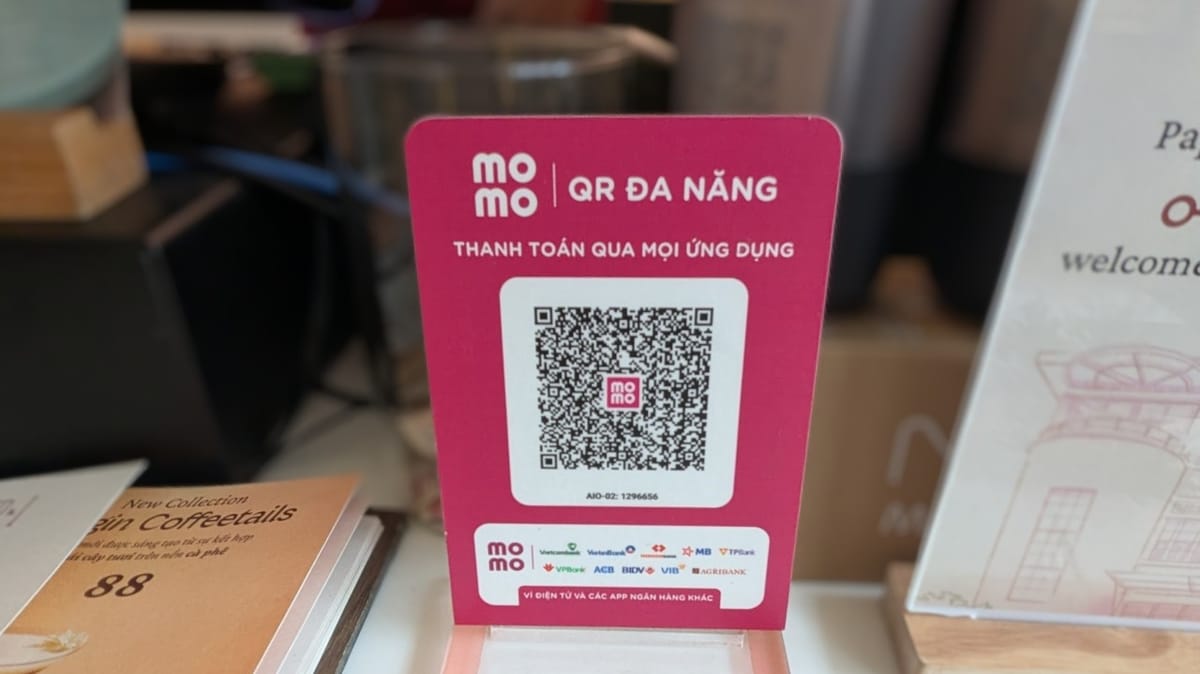
Buy a coffee on a street corner in Vietnam, and the payment QR code the vendor holds up is most likely MoMo's. Order household goods at midnight in Taiwan, and the platform is also called momo. Same name, and no relationship whatsoever between the two companies.
Vietnam's MoMo is a fintech company. Founded in 2010, it started with mobile payments and layered on transfers, bill payments, insurance, and micro-loans. In 2024 it rebranded itself as an "AI financial assistant" (Trợ thủ tài chính với AI). It has more than 40 million registered accounts and, by 2024 figures, close to a 70% share of Vietnam's e-wallet market.
Taiwan's momo is Fubon Media Technology, part of the Fubon Group. It began as a TV shopping channel in 2005 and is now Taiwan's largest B2C online shopping platform.
One does payments, the other does e-commerce, and their revenue and profits sit in different weight classes — there is not much point comparing the numbers. What is worth comparing is the direction of the turn. In 2024 and 2025, the two identically named companies hit their inflection points almost simultaneously, in opposite directions: Vietnam's MoMo posted its first full-year profit fourteen years after founding, while Taiwan's momo recorded its first annual revenue decline since going public. By mid-2026, each story had moved on another chapter.
MoMo followed the standard emerging-market tech playbook: burn cash to win users first, figure out profit later. It raised more than US$400 million along the way, the last round led by Japan's Mizuho Bank in 2021.
The turn came in 2024. Revenue reached 3.3 trillion VND, and net profit came in at 348 billion VND (about US$13.4 million) — the first profitable year in the company's history. What flipped the number was cost discipline: selling expenses edged down and financial expenses fell by a third. One caveat: MoMo is not listed and has not published full-year 2025 results, so the financial figures here stop at 2024.
Profitability changed MoMo's standing in the capital market. In April this year, Reuters reported that MoMo had hired Jefferies and Morgan Stanley to explore bringing in new investors at a valuation above US$2 billion — and that an IPO was not part of the near-term plan. In June, Vietnamese financial outlet The Investor reported the talks had escalated: investors were looking at acquiring up to 50% of existing shares, at a valuation reportedly as high as US$3 billion. In early July, Reuters named names — Blackstone, CVC Capital Partners, and Japan's MUFG are among the bidders, with binding bids due in September.
Note what kind of deal this is: a secondary sale. Buyers purchase shares from existing shareholders, and none of the money goes into the company. It is an exit transaction, not a fundraise.
Why sell existing shares instead of listing? Because the IPO route is blocked for now. Vietnam's securities law requires listed companies to be consistently profitable and carry no accumulated losses. MoMo only started making money in 2024, and its balance sheet still carries 4.7 trillion VND in accumulated losses from the cash-burning years — one or two years of profit will not clear that. For the foreign investors who hold more than 70% of MoMo — Warburg Pincus, Mizuho, and others — waiting for an IPO takes too long, and a secondary sale is the more practical way out. What the bidders are buying into is a platform with more than 30 million active users that processes upwards of 5 billion transactions in a single quarter.
Taiwan's momo spent 2025 in a different situation. Fubon Media's full-year revenue came to NT$108.66 billion, down 3.4% — the first annual decline since its listing — and profit fell harder, with operating income down more than 20%.
The backdrop is a structural shift in the market. Taiwan's cross-border e-commerce imports grew nearly 15% in 2025, crossing 10% of the domestic e-commerce market for the first time. What Taobao, Temu, and Coupang take is spending that used to flow to local platforms. The domestic market itself has been growing at only around 3% a year for the past two years.
In the first half of this year, momo's revenue stopped falling. First-half revenue reached NT$53.69 billion, up about 2.4%, and June — powered by the 618 shopping festival — set a record for the month. But profit is still sliding: first-quarter net profit fell more than 25%, partly because a tax credit booked a year earlier had made the comparison base unusually high. Revenue stabilizing while profit falls: the combination says the transition is only halfway done.
The direction momo is betting on is a shift from selling goods itself to running a platform. Its third-party marketplace, mo店+, now has close to 10,000 curated merchants, with third-party transaction value growing at a double-digit annual rate. momo Ads — a retail media business that sells ad slots on momo's own shopping site — has drawn more than 10,000 brands. In March this year, the company deregistered its Hong Kong subsidiary to concentrate resources on Taiwan. The revenue mix is moving, but whether selling ads and platform services can make money the way selling goods did, the profit numbers have not yet answered.
Why did two companies with the same name head in opposite directions at roughly the same time? The answer lies in the markets they sit in.
Vietnam's digital payments are in their boom phase. In 2025, cashless transaction volume grew more than 40% year on year, and total transaction value ran to about 28 times GDP — a figure that counts the full flow of all cashless transactions, including high-frequency transfers, which is why it dwarfs GDP. The government's target is 80% cashless transactions by 2030. In a market like this, payment is the entry point, and whoever holds the entry point can stack lending, insurance, and investment — the high-margin businesses — on top.
Taiwan is the opposite case. E-commerce penetration has been stuck at around 13% for two years, and the B2C market, at nearly NT$683 billion, has limited room to grow. Mobile payments are long since ubiquitous. Platforms compete on who can generate more business from users they already have. momo's move toward retail media and third-party commerce is a mature-market play: finding a second profit curve on ground that is no longer expanding.
Looking back from mid-2026, the two MoMos each stand somewhere new. For Vietnam's MoMo, the next date that matters is September, when Blackstone, CVC, and MUFG must submit binding bids — a chance for early investors who have waited more than a decade to finally cash out, with an IPO deferred until the accumulated losses are cleared. Taiwan's momo has the next few quarters to prove two things: that the revenue recovery is not riding on a single shopping festival, and that the platform and advertising businesses can genuinely make money.