Tan Son Nhat Breaks 1,000 Flights a Day During Tet — A Stress Test for the New T3 Terminal
Tan Son Nhat hit 1,050+ flights in a single day for the first time. T3's first Tet — and possibly the last time this airport handles peak season alone.
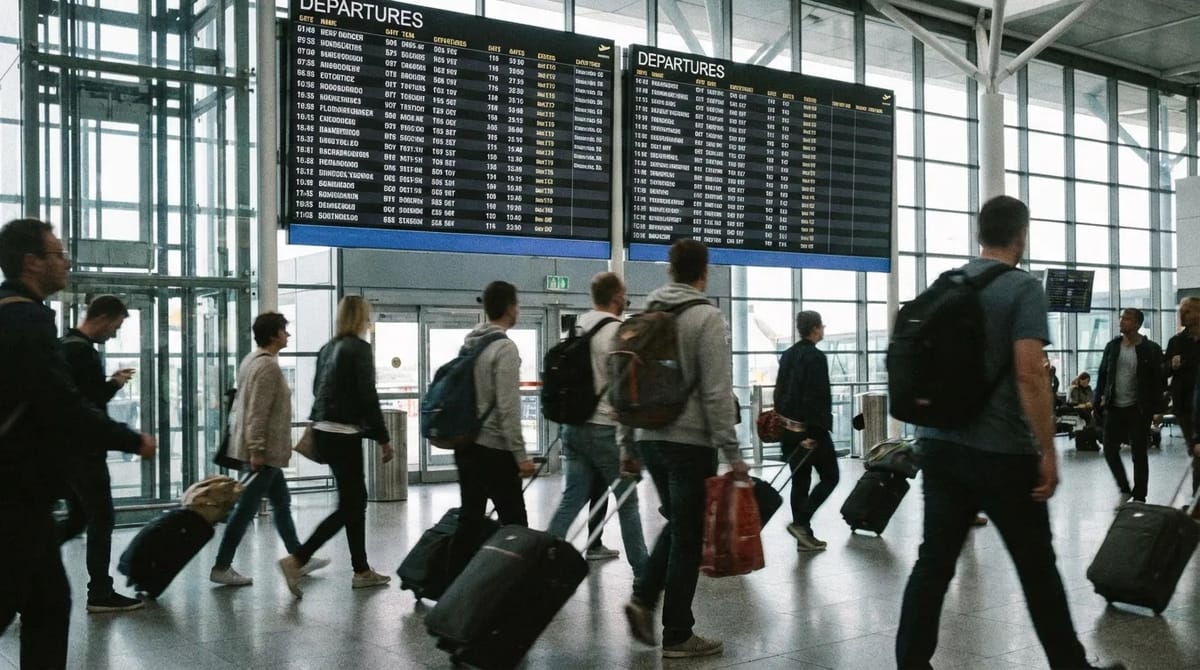
On February 11, the air traffic control center at Ho Chi Minh City's Tan Son Nhat International Airport logged 1,063 takeoffs and landings. Passenger volume exceeded 160,000.
That was the highest single-day figure in the airport's history.
The next day, February 12, the number topped 1,050 again.
That works out to roughly one flight every 80 seconds.
Tet Is Vietnam's Aviation Super Bowl
The Lunar New Year holiday is the biggest season for domestic air travel in Vietnam.
Millions of workers from the north and central regions who live in HCMC head home at once. Add international travelers, and Tan Son Nhat's throughput spikes within days.
This year's Tet peak (Year of the Horse) fell on February 13-14 (the 26th and 27th of the lunar month), with an estimated 1,075 flights per day.
The return wave around the 6th and 7th days of the new year (February 22-23) was projected at 1,025 flights.
Over the full Tet period (February 7-26), Tan Son Nhat averaged about 940 flights and 145,000 passengers per day — 20% above normal and roughly 8% higher than last year's Tet.
How T3 and Full-Capacity ATC Held It Together
Last April, Tan Son Nhat's third terminal (T3) opened.
With over 110,000 square meters of floor space, T3 is currently Vietnam's largest domestic terminal, designed for 20 million passengers a year.
This Tet was T3's first Lunar New Year in operation. Vietnam Airlines, Bamboo Airways, and Vietravel Airlines moved their domestic flights to T3, while VietJet Air's domestic routes stayed at T1.
The split eased the chronic congestion at T1 and T2. The airport also rolled out biometric security screening — passengers could check in ahead of time via VNeID or airline apps, cutting queue times.
With flights past 1,000 a day, air traffic control was the real bottleneck.
Tan Son Nhat's ATC center activated its highest operating mode during peak days: all controllers on duty, minimum rest intervals between shifts, and standby crews stationed inside the tower.
Tan Son Nhat has only two parallel runways (25L/07R and 25R/07L). Through close coordination between regional control centers, takeoff and landing intervals were compressed to near their operational limits to sustain 1,000-plus flights per day.
Possibly the Last Time It Bears the Load Alone
Despite holding up, Tan Son Nhat is an airport hemmed in by the city. There is no room to expand.
In 2025, total passenger volume hit 42.4 million. Even with T3's 20-million design capacity added, the 50-million ceiling will eventually be reached.
Every Tet, traffic on surrounding roads like Cong Hoa and Truong Chinh backs up for two kilometers. Just getting from the road into the terminal can take 20 minutes.
The good news: Long Thanh International Airport in Dong Nai province is expected to begin commercial operations in June this year.
Long Thanh's first phase cost about USD 4.6 billion, with a single 4,000-meter runway and a design capacity of 25 million passengers per year.
Once it opens, most long-haul international routes will gradually shift there, letting Tan Son Nhat focus on domestic and short-haul regional flights.
This Tet was likely the last time Tan Son Nhat will handle peak-season volumes of over 1,000 daily flights on its own. By next year, Long Thanh should be absorbing a significant share of international traffic.
In the meantime, HCMC still had to get through the current crunch.
The city added extra bus services during Tet and prepared over 2,200 backup vehicles. On Lunar New Year's Eve and the first three days, city buses and Metro Line 1 (Ben Thanh–Suoi Tien) were free to ride.
For intercity travel, about 70% of the city's 1.2 million bus tickets had been sold, with surge pricing capped at 40-60% above base fares.
Inside the airport, new signage and routing between T1 and T3 were installed to keep passengers from showing up at the wrong terminal.