Takashimaya Bets on Hanoi — A 200-Year-Old Kyoto Shop's Southeast Asia Gamble
Takashimaya's first new overseas department store in eight years — in Hanoi's priciest neighborhood. Why is a nearly 200-year-old Kyoto shop making Vietnam its comeback bet?
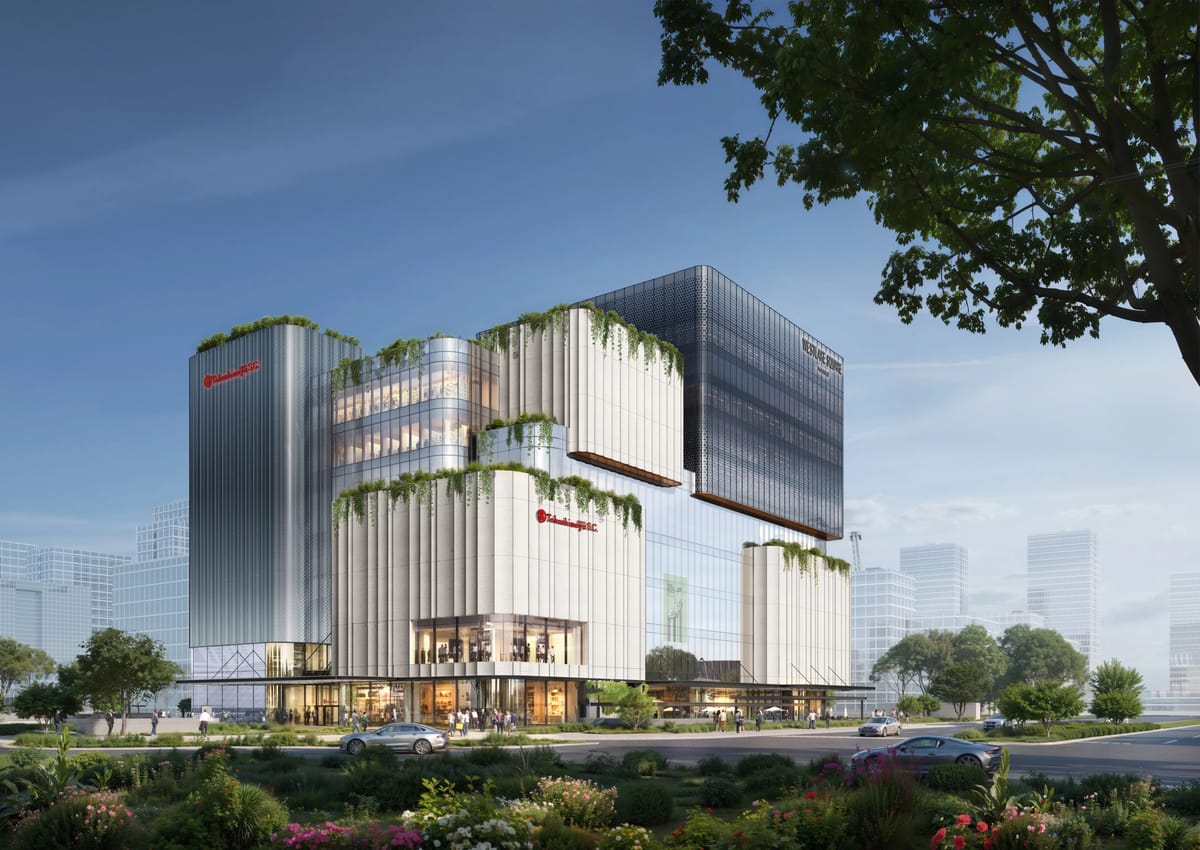
Last year, Japan's Takashimaya Group broke ground on a mixed-use complex called Westlake Square in the Starlake urban area of Tay Ho Tay (West of West Lake), Hanoi. Inside will be Hanoi's first Takashimaya department store, slated to open in fall 2027.
This is Takashimaya's first new overseas department store since its Bangkok location in 2018 — an eight-year gap — and its second in Vietnam.
Why is a nearly 200-year-old Kyoto shop putting Hanoi next on the list?
To answer that, you have to start with a retreat on New York's Fifth Avenue.
Starting From 3.6 Square Meters in Kyoto
In 1831, a merchant named Iida Shinshichi opened a small shop in Kyoto selling secondhand kimonos. The storefront was just 3.6 square meters — about the size of a double bed.
That was the beginning of Takashimaya.
Over the next century-plus, Takashimaya grew from a kimono shop into a department store chain, expanding to Osaka and Tokyo, becoming one of Japan's iconic retail names.
In 1958, Takashimaya went overseas for the first time, opening a store on Fifth Avenue in New York.
But the New York store never really made money in over fifty years of operation.
In 2010, Takashimaya closed it and redirected resources toward Asia.
Ten Years of Losses and a Turnaround in Singapore
Takashimaya's Asian expansion started with Singapore.
In 1993, it partnered with local conglomerate Ngee Ann Kongsi to open a store in Ngee Ann City on Orchard Road.
The early years were rough — a decade of continuous losses. Internally, there were discussions about pulling out.
But Takashimaya stayed. It kept adjusting its product mix and floor layout, gradually finding the right positioning for the Singapore market.
Today, the Singapore store contributes about one-fifth of the group's operating profit and is its most successful overseas location.
The experience taught Takashimaya a key lesson: overseas markets take time. You cannot just transplant the Japan model.
Seven Years of Losses in China — and a Near Exit
After the Singapore turnaround, Takashimaya entered Shanghai in 2012, opening its first China store in the Changning district.
It lost money for seven straight years.
In June 2019, Takashimaya announced it would exit China.
Two months later, it reversed course. The landlord agreed to cut rent, and the Shanghai city government stepped in to mediate. Takashimaya decided to stay.
In 2016, Takashimaya's joint venture in Taiwan — Dayeh Takashimaya — saw the Japanese side divest entirely, with the local Dayeh Group taking full ownership.
New York closed. Taiwan divested. Shanghai nearly closed.
By the end of 2019, the only overseas markets where Takashimaya was truly established were Singapore and Ho Chi Minh City.
HCMC: Vietnam's First Japanese Department Store
In August 2016, Takashimaya opened in Saigon Centre in District 1, HCMC — Vietnam's first Japanese department store.
The partner was Singapore's Keppel Land. Takashimaya's real estate subsidiary Toshin Development held about 22.7% of Saigon Centre Phase 2.
The HCMC store did not copy the Japan template from the start.
The basement food hall gave roughly half the space to Japanese brands and the other half to Vietnamese flavors — like pho made with wagyu beef.
Seating areas were deliberately made larger because Vietnamese diners prefer eating with family and friends, unlike Japan's department store food courts where takeout dominates.
Eight years in, cosmetics and fashion are the top-selling categories, and overall performance has grown steadily.
In fiscal year 2024 (ending February 2024), the HCMC store posted revenue of about JPY 3 billion and operating profit of about JPY 100 million.
The numbers are modest, but for Takashimaya, Vietnam is one of the few overseas markets still growing.
Hanoi: Not Just Retail — Real Estate
Takashimaya's Hanoi play started earlier than most people realize.
In 2019, Toshin Development and Shimizu Corporation formed a joint venture to acquire Indochina Plaza Hanoi in the Cau Giay district, with Toshin holding a 60% stake.
The complex includes retail, office, and residential space totaling about 32,000 square meters of floor area.
After renovation in 2023, it was rebranded as "The Loop by Takashimaya Group" — the group's first footprint in Hanoi.
In 2022, Takashimaya established Toshin Development Vietnam to manage its Vietnamese real estate operations.
Toshin currently has at least five projects underway in Vietnam, including participation in Vingroup's large-scale development on Vu Yen Island (Royal Island) in Hai Phong, alongside Nomura Real Estate and Taisei Corporation.
In other words, Takashimaya in Vietnam is no longer just about department stores. It is expanding through a twin-track model of real estate plus retail.
Westlake Square: Hanoi's First Takashimaya Department Store
Back to Westlake Square in Hanoi.
The concept mirrors HCMC's Saigon Centre: the building is called Westlake Square, and the anchor tenant is Takashimaya department store.
It sits on the C1-CC1 plot of the Starlake urban area — one of Hanoi's most expensive neighborhoods in recent years.
The developer is Toshin Development, on a site of approximately 1.72 hectares.
Phase 1 will have 10 above-ground floors and 3 underground levels, with total floor area of about 43,000 square meters.
Basement 1 through the 6th floor will house the Takashimaya department store and commercial space. Floors 7-10 will be offices.
Investment: about JPY 2 billion (approximately USD 12.9 million).
Construction began in August 2025, with opening targeted for Q3 2027.
Phase 2 calls for a 35-story office tower, not expected to break ground until after 2030.
Takashimaya has set a profit target of JPY 4.4 billion for its Vietnam business by fiscal year 2027 — double the 2023 figure.
Whether Westlake Square can deliver remains to be seen, but Vietnam's weight within the group is clearly rising.
The Japan-Korea Retail War in Starlake
Takashimaya's chosen site is not exactly quiet.
The Starlake area has also attracted South Korea's Lotte Group and Japan's Aeon Mall.
After Takashimaya broke ground in August 2025, Vietnamese conglomerate THACO's subsidiary THSO also began developing Thiso Mall in the West of West Lake area.
Add Lotte Mall West Lake, which opened in 2023, and this neighborhood is turning into a battleground for Japanese, Korean, and Vietnamese retail giants.
Hanoi's premium retail market is still in its early stages. Whether consumer spending can support this many large-scale malls is the question everyone is watching.
Takashimaya has the advantage of already operating The Loop in Hanoi for several years, giving it some local market knowledge.
But Starlake is a new development zone. Residents are still moving in, and it will take time for the commercial district to mature.
Takashimaya spent nearly 200 years getting from Kyoto to Hanoi. Whether it can establish itself here may be another question that takes a decade to answer.