Starbucks Has Been in Vietnam for 13 Years. Why Is It Still Losing?
Starbucks opened its 150th store in Vietnam in January 2026. But compared to Highlands Coffee's 928 stores and the country's 500,000 coffee shops, the world's largest coffee chain remains a supporting act.
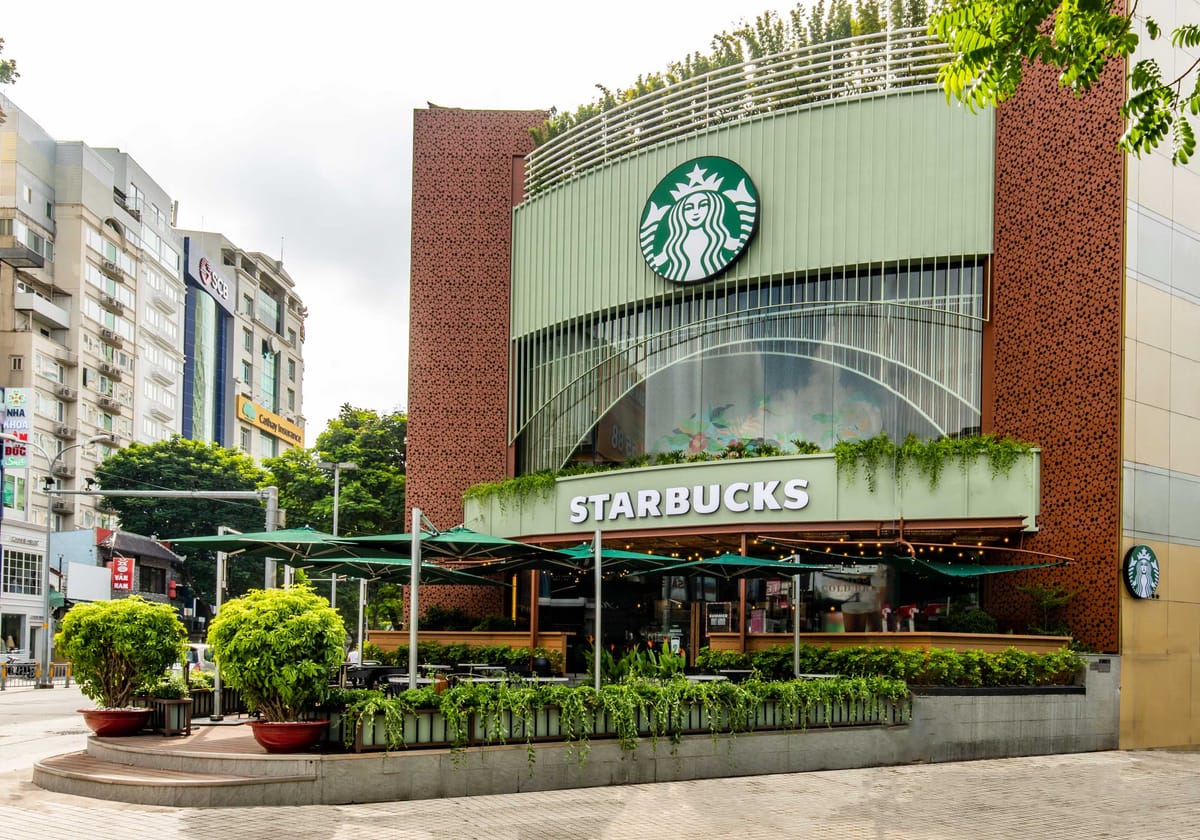
In January 2026, Starbucks opened its 150th store in Ho Chi Minh City.
But 150 stores took 13 years.
That sounds like steady growth — until you compare it with Highlands Coffee, a Vietnamese chain that hit 928 stores by September 2025, growing over 50% in three years.
The world's biggest coffee chain, in the world's second-largest coffee-producing country, spent 13 years and still trails behind Highlands and Phuc Long in store count.
It's a counterintuitive story.
The Coffee King's Prophecy
In January 2013, Starbucks opened its first Vietnam store next to the New World Hotel in District 1, Ho Chi Minh City. About a hundred people lined up on opening day.
At the time, Vietnam's "Coffee King" Dang Le Nguyen Vu (Dang Le Nguyen Vu) fired a public shot: "What they sell isn't coffee. It's sugar water that tastes like coffee."
He added: "Even in the best case, they'll have maybe 100-something stores in Vietnam after 10 years."
Dang Le Nguyen Vu is the founder of Trung Nguyen Coffee, whose G7 instant coffee beat Nescafe in a 2003 blind taste test and once held 38% of Vietnam's instant coffee market.
Ten years later?
In September 2023, Starbucks opened its 100th store in Vietnam.
Year ten, barely past 100. The prophecy was almost exactly right. Several Vietnamese media outlets ran stories calling it a "prophecy fulfilled."
The World's Second-Largest Coffee Producer
To understand why Starbucks hit a wall in Vietnam, you need to understand Vietnam's relationship with coffee.
Vietnam is the world's second-largest coffee producer, behind only Brazil.
In 2025, coffee exports hit USD 8.9 billion, a record high.
Most plantations are in the Central Highlands — Dak Lak province alone accounts for 30% of national output.
About 96% of Vietnamese coffee is Robusta.
Robusta is more bitter, more intense, and higher in caffeine than Arabica.
People who grew up on Robusta try Arabica and think: "Too weak. No flavor."
Starbucks insists on 100% Arabica worldwide.
In most markets, that's a quality badge. In Vietnam, it's a disadvantage.
A Cup of Coffee for 60 Cents
In 1857, French missionaries brought coffee to Vietnam.
Fresh milk was hard to find, so the French and Vietnamese started pairing dark-roasted coffee with condensed milk.
That combination survived to the present day as Vietnam's national drink: ca phe sua da — iced condensed milk coffee.
The method is simple: a metal drip filter (phin) sits on top of a glass with condensed milk at the bottom. Coffee drips slowly through, you stir, add ice.
A cup at a street stall costs about 15,000 to 20,000 VND — roughly 60 to 80 US cents.
Vietnam has about 500,000 coffee shops, the vast majority being street stalls and independent mom-and-pop stores.
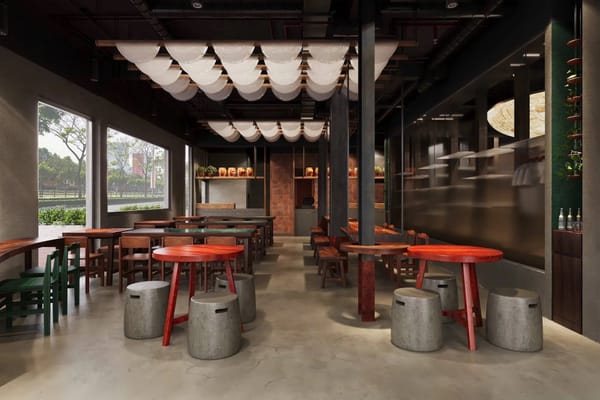
Plastic stools, small tables, facing the street, sitting for an hour or two.
People chat, do business, scroll their phones, zone out.
This isn't a poor-people thing — lawyers and engineers sit on those same stools after work.
A basic Starbucks drink starts at about 55,000 VND, with popular items running 80,000 to 100,000 VND — three to five times the price of street coffee.
The average monthly salary in Vietnam is about USD 330. A single Starbucks drink equals roughly 1% of that.
But price is just the surface.
The deeper issue: the way Vietnamese people drink coffee and the experience Starbucks is trying to sell are two completely different things.
From Seattle to Saigon
Highlands Coffee, Vietnam's largest coffee chain, has an interesting origin story.
Founder David Thai was born in southern Vietnam and emigrated to the US at age seven, landing in Seattle — yes, Starbucks' hometown.
He studied business at the University of Washington, then returned to Vietnam in 1995.
He founded Highlands Coffee in 1999, initially selling packaged coffee through supermarkets and hotels.
In 2002, he opened the first cafe across from Notre-Dame Cathedral in Ho Chi Minh City.
Highlands' success comes down to a few things.
▸ First, pricing.
A cup costs about 29,000 to 75,000 VND, averaging around 40,000 VND — more expensive than street stalls but nearly half the price of Starbucks.
Vietnamese consumer surveys show 77.5% of people are willing to pay 21,000 to 50,000 VND per cup.
Highlands sits right in the sweet spot.
▸ Second, the product.
Highlands' signature PhinDi line keeps the essence of Vietnamese drip coffee but adds young-friendly flavors like almond, chocolate, and cream.
It also sells tea, smoothies, and banh mi.
One store can handle breakfast, afternoon tea, and work sessions — very versatile.
▸ Third, location.
Highlands has locked down virtually every high-traffic spot in Vietnam: airport terminals, shopping malls, office building lobbies, tourist landmarks.
In 2025, it went further with "Mini Cabins" at gas stations — tiny kiosks with one employee serving the full menu.
That July, it opened its first drive-thru in Ho Chi Minh City.
In 2012, David Thai sold 50% of the company to the Philippines' Jollibee Group for USD 25 million.
By 2017, Jollibee held 60%, but David Thai remains CEO to this day.
Financially, Highlands posted an EBITDA of VND 1.05 trillion (about USD 41 million) in 2024.
Same-store sales grew 10.4% in the first nine months of 2025, with Q3 EBITDA hitting a two-year high.
The company plans to IPO within 18 to 24 months, targeting USD 300 to 400 million and a valuation potentially exceeding USD 1 billion.
For comparison: Starbucks' Vietnam revenue in 2023 was VND 1.3 trillion, with a gross margin of just 19%.
Highlands' gross margin was about 70%.
The gap comes from cost structure.
Starbucks imports all raw materials from the US to maintain global consistency.
Highlands uses local Vietnamese beans and in 2025 invested nearly VND 500 billion to build its own roasting facility near Cai Mep port in southern Vietnam.
A Graveyard for Foreign Brands
At least Starbucks is still alive.
Other foreign coffee brands fared far worse in Vietnam.
Australia's Gloria Jean's entered in 2006, opened just six stores in ten years, and shuttered the last one in 2017.
Singapore's NYDC (New York Dessert Cafe) arrived in 2009, peaked at six stores, and closed them all by 2016.
Italy's Espressamente Illy also entered in 2009, opened only two stores, then vanished after its local investment partner went bankrupt.
America's Coffee Bean & Tea Leaf is one of the longest-surviving foreign players, but after 15 years it has only about 15 stores — virtually invisible.
The latest casualty is Thailand's Cafe Amazon, owned by oil giant PTT.
Cafe Amazon is a national brand in Thailand with over 4,400 stores, most inside PTT gas stations — drivers fill up and grab a coffee.
Cafe Amazon entered Vietnam in late 2020, but the problems were immediate.
Vietnam has no PTT gas stations, so the "gas station coffee" model simply didn't translate.
The menu — iced lattes and caramel mochas — had zero localization.
Prices were 35,000 to 50,000 VND, similar to local brands, but brand recognition was far weaker.
At its peak, Cafe Amazon had just 22 stores in Vietnam.
By November 2025, every single one had closed.
These brands share a common mistake: they tried to copy-paste a formula that worked elsewhere without understanding what Vietnamese consumers actually want.
The Dark Horse: Katinat
Looking only at foreign brands' struggles, you might think Vietnam's coffee market is impossible.
But one local brand has been sprinting.
Katinat opened its first store in District 1, Ho Chi Minh City in 2016. The name comes from "Rue Catinat," the French colonial-era name for Dong Khoi Street.
Founder Truong Nguyen Thien Kim is married to the chairman of Vietcap, one of Vietnam's leading brokerages.
For its first five years, Katinat had only about ten stores, taking a slow, boutique approach.
During the pandemic, many storefronts became vacant. Katinat seized the moment, snapping up prime locations at discounted rents.
In 2022, a rainbow gradient cup went viral on social media, becoming the spark that launched the brand into mainstream awareness.
Revenue surged 403% that year. Stores jumped from around ten to over thirty.
By September 2025, Katinat had 114 stores.
Katinat's approach differs from Highlands.
Instead of traditional Vietnamese coffee, it carved out a niche with fruit teas and matcha fusion drinks, targeting younger consumers.
Its location strategy: "claim the prettiest street corners" — Dong Khoi Street, the Bach Dang waterfront, next to Notre-Dame Cathedral, Landmark 81.
Every store is photogenic, giving it strong social media pull.
In Q3 2024, Katinat generated 62,700 social media mentions, surpassing Highlands as the most talked-about coffee brand.
But Katinat has stumbled too.
In September 2024, Typhoon Yagi devastated northern Vietnam. Katinat announced it would donate 1,000 VND per drink sold.
At 50,000 VND per cup, that's just 2%.
The backlash was fierce.
Katinat quickly apologized, clarifying it had already donated VND 1 billion before the campaign.
Ernst & Young Vietnam later audited the results: 888,696 cups sold across 83 stores in 19 days.
That works out to 564 cups per store per day — a number that inadvertently proved Katinat's impressive per-store sales power.
The Acquired and the Reinvented
Not every local brand is expanding.
The Coffee House is a cautionary tale.
Founder Nguyen Hai Ninh launched the brand in 2014 and grew it to 100 stores in four years, built around a "community coffee" concept.
He stepped back from daily management in 2019 and left the company entirely in 2021.
What followed was four CEO changes.
Store count peaked at about 150 in 2023, then steadily declined.
By late 2024, just 93 remained. The chain had pulled out of Da Nang, Can Tho, and other cities.
In January 2025, Golden Gate, Vietnam's largest restaurant group, acquired 99.98% of the company for VND 270 billion (about USD 10.5 million).
Three years earlier, The Coffee House was valued at over USD 50 million.
The acquisition price was a quarter of that peak.
What went wrong?
2018 was the only profitable year, followed by five straight years of losses.
Gross margins were actually strong — over 70% — but operating costs never came under control.
By the end of 2021, the company's net assets had gone negative.
Phuc Long tells a different story.
Founded in 1968 in Bao Loc, Lam Dong province, it spent its first five decades selling tea leaves and raw coffee.
It didn't open a modern cafe until 2012 in Ho Chi Minh City.
Between 2021 and 2022, the Masan Group invested about USD 280 million across three rounds for an 85% stake.
Masan's plan was to put Phuc Long kiosks inside its WinMart+ convenience stores, scaling from zero to over 1,000 kiosks in a single year.
The result: the more they opened, the more they lost.
In Q4 2022, kiosk revenue was just VND 44 billion against VND 100 billion in losses.
Masan cut most kiosks and refocused on standalone stores.
After the pivot, Phuc Long's standalone stores achieved 65% gross margins — the highest in Masan's portfolio.
Full-year 2025 revenue hit VND 1.891 trillion with net profit of VND 195 billion, both records since the Masan acquisition.
Here's a fun twist: in late 2024, Phuc Long poached Patricia Marques, Starbucks Vietnam's former general manager, as its new CEO.
Marques had spent 11 years building Starbucks' Vietnam business from 2012.
Now she's on the other side.
Why Starbucks Can't Speed Up
Put all the pieces together and Starbucks' predicament in Vietnam becomes clear.
▸ Wrong taste profile.
96% of Vietnamese coffee beans are Robusta. Vietnamese people grew up on strong, bitter, intense coffee.
Starbucks insists on Arabica. Many Vietnamese consumers say: "It doesn't taste like coffee."
▸ Too expensive.
Street stalls charge 15,000 VND. Highlands charges 40,000 VND. Starbucks charges 65,000 to 100,000 VND.
In a country where the average monthly salary is USD 330, a Starbucks drink is clearly an occasional luxury, not a daily habit.
▸ Structurally disadvantaged on costs.
Starbucks doesn't source beans locally. All raw materials are centrally purchased, roasted, and distributed from US headquarters.
In the world's second-largest coffee-producing country, the beans are imported. Gross margin: 19%. Local brands: 65% to 70%.
Prime rents are brutal too — the Reserve store at Bitexco Tower in Ho Chi Minh City pays VND 1.9 billion per month, about USD 77,000.
Earning that back cup by cup is a heavy lift.
▸ Extreme competition density.
500,000 coffee shops. One every few steps.
In that environment, brand loyalty is inherently low. Consumers switch on a whim.
▸ Cultural mismatch.
Starbucks sells the "third place" — a comfortable space between home and office. In most markets, that's a differentiator.
But Vietnamese people already have their own third place: plastic stools on the sidewalk, sitting for hours, chatting, doing deals, staring into space.
What Starbucks offers isn't scarce in Vietnam.
Compare the rest of Southeast Asia.
Thailand has 507 Starbucks locations. The Philippines has about 460. Indonesia has 603.
Vietnam has 150 — with a population over 100 million.
That's 1.5 stores per million people, the lowest density among major Southeast Asian markets.
Starbucks is trying to localize.
It partnered with indigenous farmers in Da Lat to develop two single-origin Vietnamese coffee beans, which are now sold globally in the Reserve line.
Its 2024 salted coffee (ca phe muoi) series was inspired by the traditional salted coffee of Hue.
But these efforts remain too small relative to the scale of the challenge.
A Market of 500,000 Coffee Shops
Something interesting is happening in Vietnam's coffee market: small shops are closing in droves while chains are expanding.
In the first half of 2025, over 50,000 food and beverage outlets in Vietnam shut down.
But in the same period, Highlands added a net 78 stores in nine months, Phuc Long added 79, and Katinat added 24.
Consolidation is accelerating. Chains keep gaining share.
Vietnam's total chain coffee store count is projected to exceed 5,200 in 2025 — and it's still growing.
This trend is actually an opportunity for Starbucks.
As per-capita income rises, younger consumers become more open to international brands, and FTSE's potential upgrade of Vietnam to emerging-market status brings in more foreign investment and white-collar workers, Starbucks' target audience could gradually expand.
But until then, it has to accept a reality: in Vietnam, coffee isn't just a beverage. It's a culture.
And that culture is rooted in the plastic stools on the sidewalk, in the few quiet minutes as coffee drips through a metal phin filter.
Dang Le Nguyen Vu's words from 13 years ago may have been harsh, but he saw it clearly.
In this market, brand and capital aren't enough.
You have to understand what that cup of coffee means to the Vietnamese.