Qualcomm's Vietnam GM Says 2026 Is the "Golden Moment" for Vietnam Tech. What Do the Numbers Say?
Qualcomm's Vietnam GM calls 2026 the golden moment for tech. Foreign capital is flowing in, local firms are building, and FTSE upgrades are on the horizon — but talent gaps and production readiness remain the biggest unknowns.
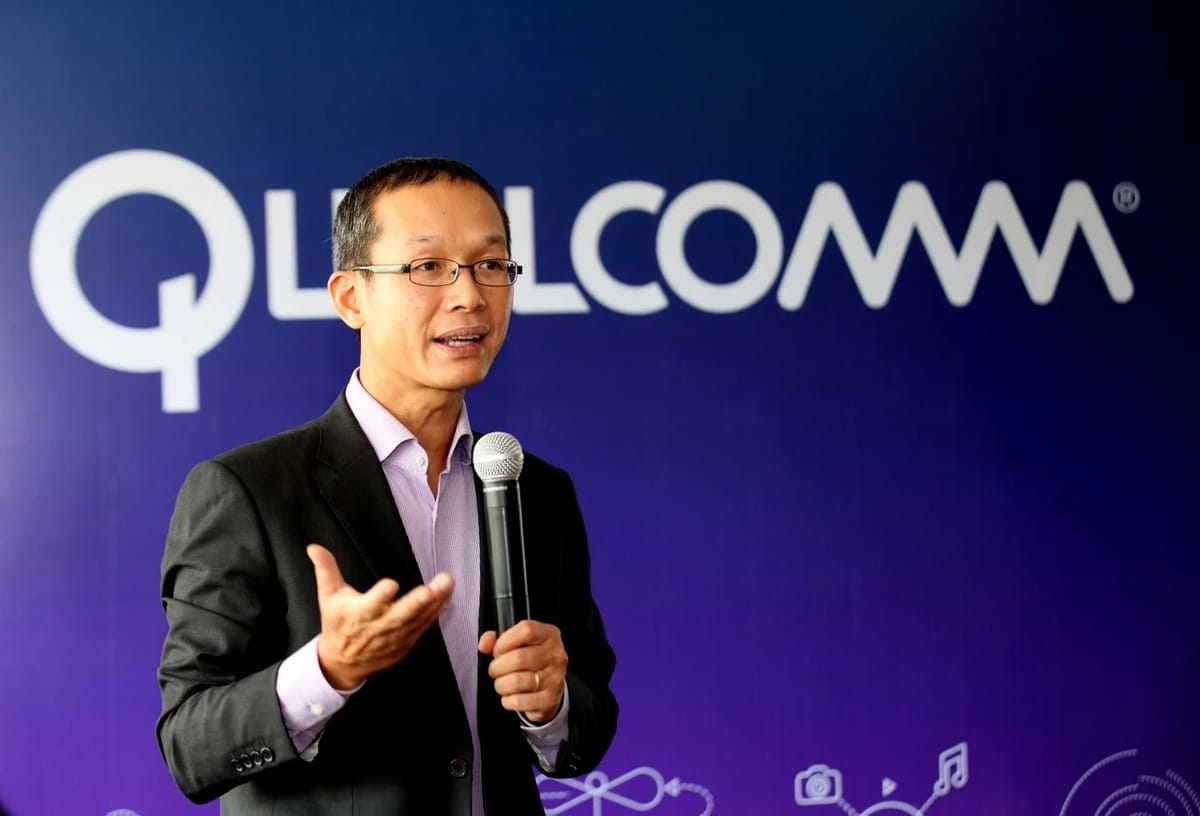
Qualcomm's General Manager for Vietnam, Laos, and Cambodia, Thieu Phuong Nam, said something striking in a post-Lunar New Year interview with VnEconomy: "2026 is the golden moment for Vietnam's tech industry."
He's spent over 25 years in Vietnam's tech scene, working across Intel, IBM, and Qualcomm. That claim is worth unpacking.
Who Is He
Thieu Phuong Nam earned a PhD in engineering science in Russia, returned to Vietnam, and joined Intel Vietnam at age 29. He stayed for ten years, rising to sales director.
He then moved to IBM Vietnam as a regional VP overseeing finance, telecom, and government sectors.
In late 2012, Qualcomm tapped him to run Vietnam, Laos, and Cambodia. He's been in the role for over 13 years.
He's one of the few Vietnamese professionals who climbed from engineer to regional head of a multinational.
From 3G to 5G to AI, he's lived through every major shift in Vietnam's telecom and tech industry.
What He Means by "Golden Moment"
Thieu Phuong Nam made three observations in the interview.
First, the digital infrastructure is ready.
Cloud, edge computing, and data governance frameworks are maturing. Companies can now deploy AI at scale.
Second, money is flowing into semiconductors and AI.
Vietnamese venture capital used to go almost exclusively into consumer apps. Now funding is starting to enter semiconductors, AI, and deeper tech.
Third, high-end talent is taking shape.
Vietnam's workforce in systems engineering, AI, and IC design is gradually catching up, enabling higher-value work.
Where the Foreign Money Is Going
Vietnam currently has 174 semiconductor-related FDI projects with registered capital approaching USD 11.6 billion.
In 2025, US-based Coherent opened a USD 127 million silicon carbide plant in Dong Nai province.
US chipmaker Amkor invested about USD 1.6 billion in Bac Ninh across three phases.
South Korea's Hana Micron has committed roughly USD 930 million through 2026.
NVIDIA also set up an R&D center in Vietnam.
But most of this investment is concentrated in packaging and testing — the relatively downstream end of the semiconductor value chain.
Foreign investors are drawn to Vietnam's labor costs and geographic position, not its design capabilities.
There's still a gap between this reality and Thieu Phuong Nam's vision of Vietnam becoming a "design hub."
Qualcomm itself, however, did something notable.
In June 2025, it opened AI R&D centers in Hanoi and Ho Chi Minh City — Qualcomm's third AI research sites outside the US, after India and Ireland.
The teams are entirely Vietnamese engineers, working directly on global product lines.
The operation is led by Dr. Hung Bui, formerly of Google DeepMind.
That's one of the rare cases of real R&D investment, not just assembly.
Is Vietnam Ready on Its Own
Local companies are moving more aggressively than before.
In January 2026, Viettel broke ground on Vietnam's first wafer fabrication plant, targeting trial production by late 2027.
That same month, FPT announced it would build Vietnam's first locally owned packaging and testing facility in Bac Ninh's An Phong II-C Industrial Zone, with six test lines planned for phase one.
FPT Chairman Truong Gia Binh put it bluntly: "Whatever Viettel produces, FPT will package and test."
In early March, FPT, Viettel, and VNG all joined Qualcomm's global 6G alliance.
The direction is clear, but everything is still early stage.
Viettel's fab is at least two years from mass production. FPT's packaging plant won't finish phase one until 2027.
There's always a distance between announcing plans and actually shipping products.
Talent is another hard reality.
Vietnam currently has about 15,000 semiconductor workers — roughly 7,000 in IC design and 7,000 to 8,000 in packaging and testing.
The government's target is 50,000 semiconductor engineers by 2030, including 15,000 in IC design.
Ho Chi Minh City now has over 50 fabless design firms and multinational R&D centers. The ecosystem is growing, but the talent gap is the biggest variable in whether any of these plans actually materialize.
One More Big Factor
In October 2025, FTSE Russell announced that Vietnam will be upgraded from frontier market to emerging market status in September 2026.
An estimated USD 6 billion in passive index-tracking funds alone is expected to flow in.
Not all of that money will go to tech, but it lifts the overall investment environment and corporate valuations.
For the semiconductor industry, the capital market confidence from FTSE's upgrade may matter more than any policy announcement.
If you'd asked five years ago whether Vietnam could claim a spot in the global semiconductor supply chain, most people would have said "unlikely."
Now the money is moving, the people are moving, and the policies are moving.
Whether Thieu Phuong Nam's "golden moment" has already arrived or is just around the corner — only time will tell.