From Fleeing Saigon to Earning a Michelin Star: Peter Cuong Franklin''s Three Lives
Airlifted out of Vietnam at 12 during the fall of Saigon, Peter Cuong Franklin went to Yale, spent 15 years on Wall Street, then quit to attend Le Cordon Bleu. He returned to HCMC and opened a Michelin-starred restaurant inside a wet market.
From a helicopter to Wall Street
Late April 1975, days before the end of the Vietnam War.
Twelve-year-old Peter Cuong was put on a U.S. military helicopter and left Vietnam for good.
He had grown up in the highlands of Da Lat, where his mother ran a small noodle stall selling mi Quang and cha lua. She was known in the neighborhood as the best cook around.
After that day, he lost contact with his mother for twenty years.
Peter was adopted by an American Navy family and started over in the United States.
He went to Yale, then joined Morgan Stanley's investment banking division, rotating between New York, London, and Hong Kong for roughly fifteen years.
The resume was impressive. The pay was generous. But by his own account, he was not happy.
"Like most Asian kids, the family expected you to become a doctor, lawyer, or go into finance. I went the finance route."
In 1995, a childhood friend helped him find his birth mother, still in Vietnam.
Peter made his first trip back, twenty years after leaving.
He described the reunion as "deeply emotional" — but the bond between mother and son had not faded.
"To my mom, I am always a kid. Every time I visit, she insists on feeding me."
That reunion also brought back childhood memories of watching his mother cook at her stall in Da Lat.
"I never forgot my mother's cooking. She was my real culinary mentor."
A Michelin star inside a wet market
Peter left banking, flew to Paris, and enrolled at Le Cordon Bleu, earning dual diplomas in cuisine and patisserie.
He then trained at Alinea in Chicago (three Michelin stars), Nahm in Bangkok, and Caprice in Hong Kong.
In Hong Kong, he opened two Vietnamese restaurants — Viet Kitchen and Chom Chom.
When Chom Chom first opened, some diners complained: why is Vietnamese food this expensive, and why are the portions so small?
Peter said that experience made one thing clear: the stereotypes around Vietnamese cuisine run deep.
"Vietnamese food is famous for being cheap and delicious. But nobody thinks it can be refined."
In 2017, he returned to HCMC and opened Anan Saigon inside Cho Cu (the Old Market) in District 1.
"Anan" means "eat eat" in Vietnamese.
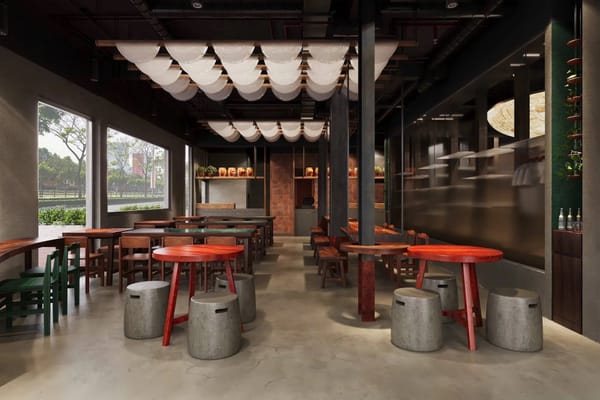
He chose a narrow tube house over a flashy commercial district. Downstairs, traditional market vendors hawk their goods. The top floor houses the cocktail bar Nhau Nhau. The dining space sits in between.
A graffiti wall at the entrance is his statement — come for fine dining, leave the suit and tie at home.
His signature approach takes Vietnamese street food apart and reassembles it: foie gras spring rolls, caviar shrimp crackers, truffle wagyu one-bite pho.
Over 90% of ingredients are sourced locally in Vietnam — only butter and milk are imported.
In 2023, when Michelin released its first Vietnam guide, Anan Saigon earned one star and was also named to the Asia's 50 Best Restaurants list.
A VND 3.5 million bowl of pho
In late 2025, Peter opened a new restaurant next to Anan called Pot Au Pho 2.0.
The name fuses the French pot-au-feu with Vietnamese pho.
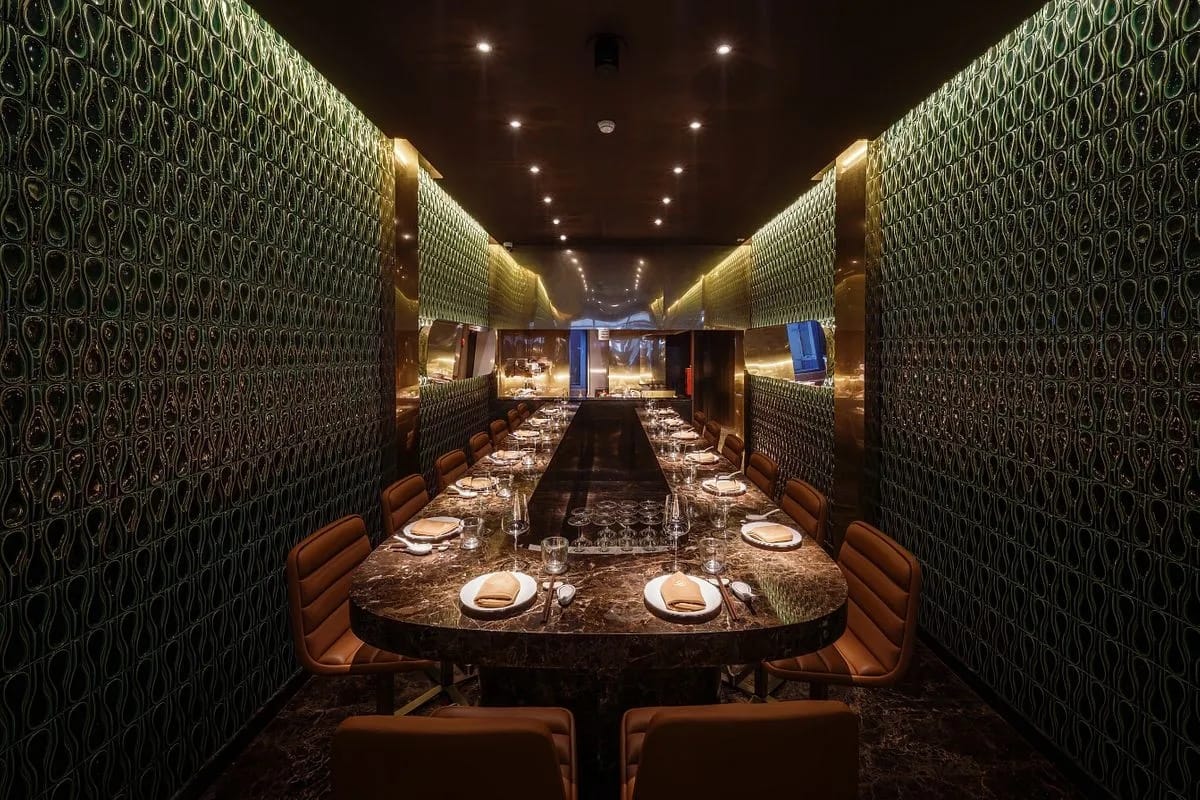
Just 14 seats surround an open kitchen, like a Japanese omakase sushi bar.
Twelve courses, two hours, VND 3.5 million per person (about USD 134), drinks extra.
He deconstructs a bowl of pho into twelve forms: caviar onsen egg pho, molecular pho, Angus beef tartare pho, a tasting flight of three regional pho styles, and a "Le Pot Au Pho" made with wagyu, foie gras, and French puff pastry — inspired by Paul Bocuse's legendary truffle soup.
The broth is treated using consomme technique — crystal clear to the eye, but with all the spice and depth a bowl of pho should have.
"I used to just want to make a great bowl of pho. Now I want to take it apart and see what else it can become."
He also tried pho-flavored ice cream — and gave up. "The line between savory and sweet is too thin."
Peter now lives full-time in HCMC and regularly visits his mother in Da Lat.
Above the restaurant, he set up an R&D lab to study fermentation, exploring how to apply Japanese sake brewing techniques to traditional Vietnamese rice wine.
Outside work, he sits on the board of Streets International, an organization that provides hospitality training to disadvantaged Vietnamese youth.
In an interview with a Vietnamese magazine, a reporter asked what he eats most often. He said: "Rice with morning glory. Those two things remind me who I am and where I come from."
Fifty years ago, a twelve-year-old boy was airlifted out of Saigon.
Fifty years later, he found his way home through a bowl of pho.