Hanoi's Motorcycle Ban Starts July 2026: The Beginning of the End for 7 Million Bikes
Hanoi bans gasoline motorcycles from central districts starting July 2026. Honda faces headwinds while VinFast sales surge fourfold.
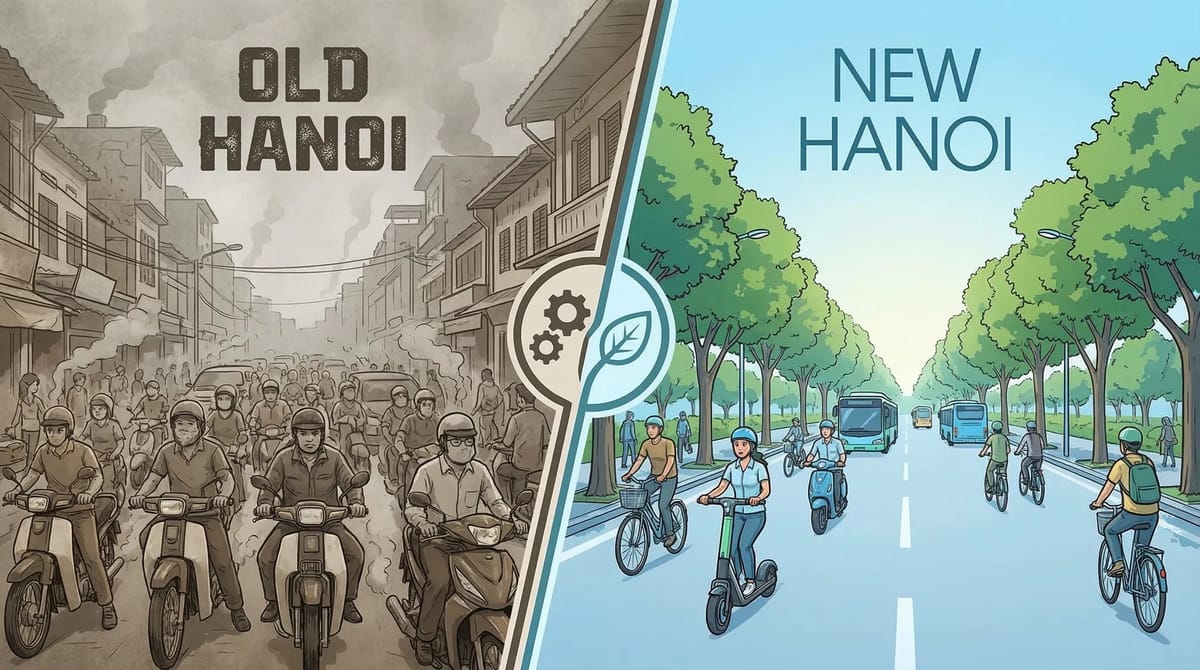
If you've ever stood at a Hanoi intersection during rush hour, the image probably stays with you. Thousands of motorcycles flooding past in every direction, horns blaring, exhaust fumes hanging in the air.
That scene may soon become history.
City Council Passes the Ban
In late 2025, the Hanoi People's Council approved a "low-emission zone" resolution. Starting July 2026, gasoline-powered motorcycles will be banned from designated central areas.
After public consultation, the original plan was scaled back: the ban will first apply to the most central districts during specific hours. Anyone who has visited Hanoi knows these areas -- around Hoan Kiem Lake, West Lake, and the Temple of Literature.
Three Phases, Full Ban by 2030
The ban rolls out in three stages: start with the city center, expand the zones, and by 2030, cover the entire urban area. Looking further ahead, Vietnam plans to phase out gasoline motorcycles nationwide by 2045.
Why the Ban? 70,000 Deaths a Year From Air Pollution
How bad is Hanoi's air? The city regularly ranks among the world's most polluted, sometimes taking the top spot.
The causes are complex -- vehicle emissions, construction dust, industrial waste. The government sees phasing out old gasoline motorcycles as one path to cleaner air.
Hanoi has nearly 7 million motorcycles, and 70% of them are over 10 years old. Of the city's 14 million daily trips, more than 80% rely on motorcycles.
International studies estimate air pollution kills about 70,000 Vietnamese each year -- far more than traffic accidents.
Public Reaction: 60% Say It Won't Work
Local media polls show nearly 60% of respondents consider the ban "impractical." The loudest pushback comes from the working class. Motorcycles are their livelihood tools. Electric bikes are too expensive. Hanoi's public transit covers only about 10% of commuting needs. The metro is still under construction. Bus routes aren't dense enough. Ban motorcycles, and how do people get to work or deliver food?
Government Incentives: Subsidies, Tax Breaks, Shared Bikes
The government has rolled out incentives: subsidies for electric motorcycles, full registration fee waivers, low-interest loans, and a shared electric bicycle program. But for low-income workers, the subsidies still fall short, and charging stations remain sparse.
Japanese Brands Sweat, VinFast Grins
Vietnam is the world's fourth-largest motorcycle market. Honda alone holds an 80% share. After the ban was announced, Honda's sales dropped over 20%. The Japanese embassy sent a letter to Vietnamese authorities warning that the ban could hurt dealers and parts suppliers, affecting hundreds of thousands of workers.
Honda, Yamaha, and Suzuki jointly petitioned for a delay. But these Japanese makers have been slow to go electric. Honda only started selling electric motorcycles in Vietnam this year, and hasn't pushed them aggressively.
Meanwhile, Vietnamese electric vehicle maker VinFast has seen its electric motorcycle sales quadruple since the ban was announced. It's the biggest winner.
Not Just Hanoi
Hanoi will be Vietnam's first city to ban motorcycles. HCMC is already studying similar measures. For anyone living or investing in Vietnam, this policy affects more than commuting -- it touches logistics costs and the electric vehicle industry's future.
Sources: VnExpress, Tuoi Tre, Thanh Nien, Vietnam+, Al Jazeera, TechNews