Giant Founder King Liu Has Died. His Bicycle Empire Already Has a Foothold in Vietnam.
Giant founder King Liu died on February 16 at age 93. From a failed eel farm to losing the Schwinn contract to building a global brand. Giant's two Binh Duong factories, at nearly USD 180 million, are the latest piece of this empire.
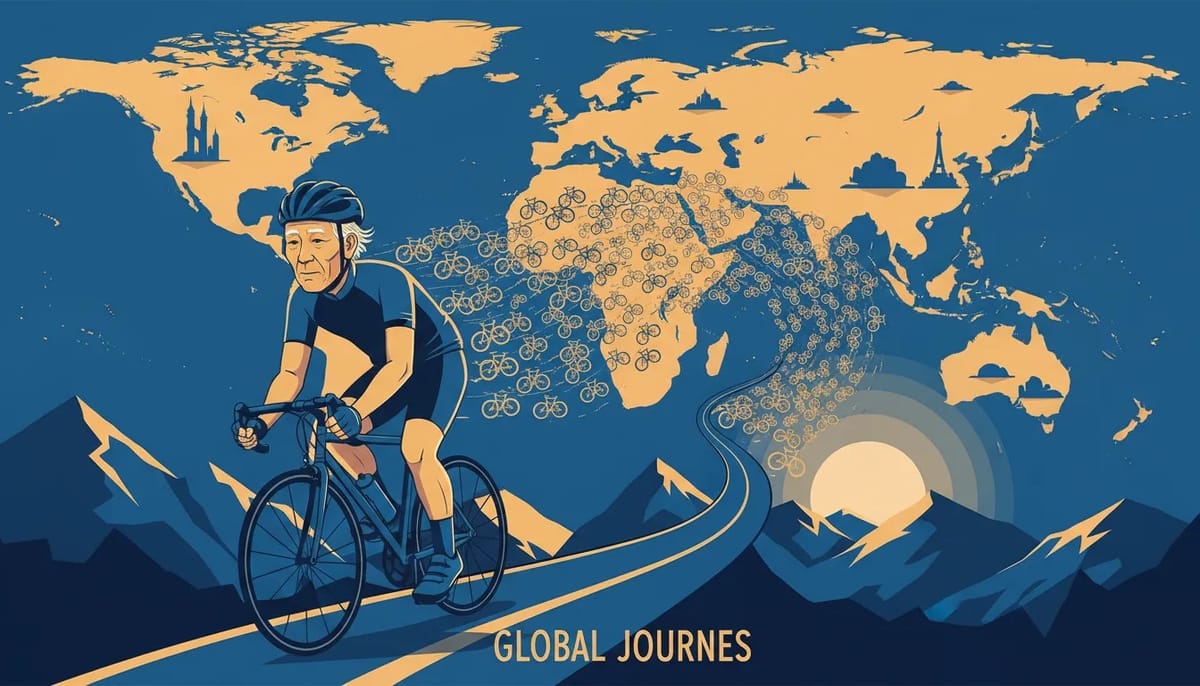
On February 16, Giant Group founder King Liu (Liu Chin-piao) passed away in Taichung at the age of 93.
In Taiwan, he was known as the "Godfather of Cycling." International media called him the cycling missionary.
Giant Group is the world's largest bicycle manufacturer. Its Giant brand sells in more than 50 countries. Revenue in 2024 was approximately TWD 71.3 billion.
And Binh Duong province in Vietnam is this bicycle empire's newest production base.
An Eel Farm Goes Bust. He Starts Over at 38.
King Liu was born in Shalu, Taichung in 1934.
He tried everything when he was young: lumber, flour, screws, trucking. He switched industries more than a dozen times.
The worst failure was eel farming. He invested TWD 20 million. A typhoon wiped it all out in 1971.
The following year, 38-year-old Liu pooled his remaining funds with eight other shareholders to put together TWD 4 million and founded Giant Mechanical in Dajia, Taichung.
The company was named "Giant." It had 38 employees.
For the first three years, orders barely came in. The company lost money for four straight years.
He Made Bikes for Schwinn. Then Schwinn Dumped Him.
In 1977, Giant landed a contract to manufacture bicycles for American brand Schwinn. The company finally had a lifeline.
In 1980, a strike shut down Schwinn's Chicago factory. Schwinn closed it and shifted all production to Giant.
By 1984, Giant was producing about 500,000 bicycles a year for Schwinn, accounting for two-thirds of Schwinn's sales and 75% of Giant's revenue.
Liu knew full well that putting all eggs in one basket would eventually go wrong.
In 1981, he launched Giant's own brand, later saying a line that would be quoted for decades: "We cannot spend our whole lives making wedding dresses for other people."
Sure enough, Schwinn decided Giant was too expensive and moved orders to a Shenzhen factory in 1987.
In 1991, Giant and Schwinn officially parted ways. But by then, the Giant brand already accounted for 60% of revenue. Giant had long stopped depending on Schwinn.
Schwinn filed for bankruptcy in 1992.
From Contract Manufacturer to Global Brand
After losing Schwinn, Giant went all-in on its own brand.
In 1986, it opened its first overseas subsidiary in the Netherlands, entering the European market.
In 1987, it launched the Cadex, the world's first mass-produced carbon fiber road bike.
In the 1990s, it began sponsoring professional cycling teams. In 1998, Giant's TCR frame appeared at the Tour de France.
In 2003, Liu reached out to competitor Merida. The two companies brought together 11 component makers to form A-Team (Taiwan Bicycle Alliance), introducing the Toyota Production System and pushing Taiwan's bicycle industry from cheap OEM to high-end manufacturing.
By 2017, Giant's annual output reached 6.6 million units. Revenue hit USD 1.9 billion. It was the world's largest bicycle manufacturer.
Cycling Around Taiwan at 73
King Liu's most famous personal story came at age 73.
In 2007, inspired by a line from the Taiwanese film "Island Etude" ("Some things, if you don't do them now, you never will"), he spent 15 days cycling 927 kilometers around Taiwan.
His family and company executives opposed it. He had long suffered from sleep apnea and sciatica. On the Shouqia pass, he stopped five times before making it to the top.
That journey later became the annual "Formosa 900" cycling event.
In 2014, Liu did it again at 80. He completed 966 kilometers in 12 days. This time, he rode up Shouqia without stopping once.
He was also the driving force behind Taiwan's YouBike public bicycle system. In 2009, YouBike launched a pilot in Taipei with just 23 rides per day. It lost tens of millions of TWD. Liu insisted on continuing, calling YouBike "a gift to the people of Taiwan."
By 2024, Taipei alone logged over 65 million YouBike rides per year.
Binh Duong: Two Factories, Nearly USD 180 Million
Giant Group currently operates nine factories worldwide, in Taiwan, China, the Netherlands, Hungary, and Vietnam.
The Vietnam plants are in Binh Duong province, built in two phases.
The first factory is in the Vietnam-Singapore Industrial Park (VSIP II-A). Investment began in 2021, totaling approximately USD 60 million, with a designed annual capacity of one million units. Current actual output is about 250,000 units.
The second factory is in VSIP III, with an additional USD 120 million invested.
Combined, Giant has committed nearly USD 180 million to Vietnam.
Why Vietnam
Giant chose Binh Duong for several reasons.
The province has developed a relatively complete bicycle component supply chain. Many Taiwanese parts makers are already there. Topkey, a major carbon fiber component manufacturer, also set up a Binh Duong plant in 2023.
The EU-Vietnam Free Trade Agreement (EVFTA) has significantly reduced tariffs on bicycle products since 2025, with some items dropping to zero.
Exports to the U.S. also carry tariff advantages.
For Giant, the Vietnam factories can share the capacity load from its European plants in the Netherlands and Hungary while reducing tariff costs for shipments to Europe and America.
The Vietnam plants have also started supplying e-bike frames to the Hungary factory.
E-bikes currently account for about 30% of Giant's revenue and are the fastest-growing category. Giant aims to raise that to 50% by 2030.
Succession and Current Situation
King Liu retired in 2017, handing the company to his niece Bonnie Tu as chairperson.
Under Tu, Giant hit a record TWD 92 billion in revenue in 2022 and pushed forward the Hungary and Vietnam factory projects.
But after 2022, the global bicycle industry hit a severe inventory crisis. The pandemic-era order surge receded, and Giant's revenue declined for two consecutive years. Net profit in 2024 dropped to a ten-year low.
In January 2025, Liu's son Liu Yung-chang took over as chairman and his daughter Liu Su-chuan became CEO. Giant officially entered its third generation of leadership.
King Liu started from a failed eel farm. Over half a century, he turned a 38-person workshop into the world's largest bicycle manufacturer, and made Vietnam one of the empire's production bases.