Can You Buy Coffee in Vietnam With USDT? When a Crypto Wallet Meets VietQR
Bitget Wallet lets users pay at Vietnamese shops with USDT via VietQR. A licensed intermediary converts stablecoins to VND in real time. But Vietnam's crypto regulations are tightening fast.
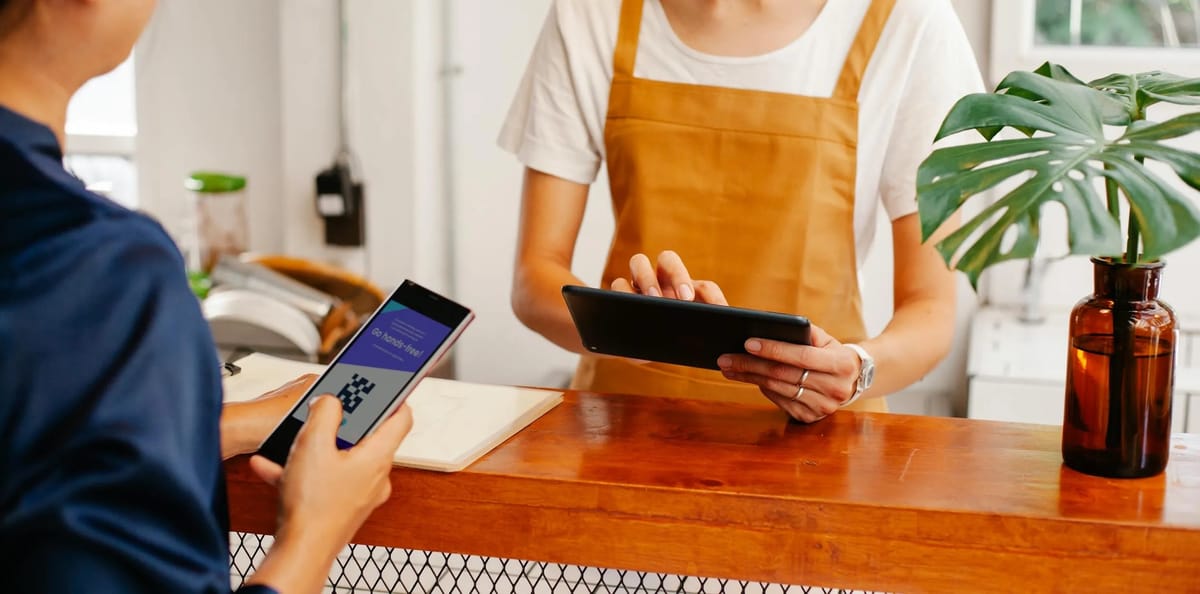
Last June, crypto wallet Bitget Wallet announced that users in Vietnam could open the app, scan a merchant's QR code, and pay with USDT.
No need to convert to Vietnamese dong first. No need to cash out through an exchange. Just scan, debit, done.
The system runs on Vietnam's national payment infrastructure, VietQR — but Bitget Wallet does not connect to VietQR directly. It goes through a licensed payment intermediary called AEON.
What is VietQR?
VietQR is a unified QR code standard launched in 2021 by NAPAS, the national payment corporation under Vietnam's central bank.
Think of it as Vietnam's universal QR code — no matter which bank app you use, you can scan the same code to pay.
The system is already widespread.
According to the State Bank of Vietnam, QR transaction volume grew over 61% year-on-year in the first nine months of 2025, while transaction value surged 150%.
More than 55 banks are connected to VietQR, covering over two million merchants.
In major cities like Hanoi and HCMC, VietQR codes are common everywhere from chain supermarkets to street-side shops.
In rural areas, though, cash is still king.
How does a crypto wallet plug into a national payment system?
Bitget Wallet partnered with AEON, a crypto payment service provider (not the Japanese AEON retail group — this is a Web3 payments startup founded in 2024).
According to Bitget Wallet, AEON is a licensed payment provider already integrated with VietQR's banking network — though no public records of AEON's specific Vietnamese license or company registration are currently available.
The flow works like this: users open Bitget Wallet, scan a merchant's VietQR code, and choose to pay with USDT or USDC.
Behind the scenes, AEON instantly converts the stablecoins to VND and routes the payment to the merchant through VietQR.
The merchant receives VND — identical to any regular bank app QR payment.
The entire process is invisible to merchants. They do not need to apply for anything extra or understand crypto.
The service currently supports stablecoins on Ethereum, Tron, Solana, Base, TON, and BNB Chain, with more auto-conversion options planned.
Vietnam's crypto regulations are tightening
This development comes as Vietnam's government is actively tightening oversight.
On January 1, 2026, Vietnam's Digital Technology Industry Law took effect, defining crypto assets in law for the first time. They are recognized as "property" but explicitly excluded as legal tender.
On January 20, the State Securities Commission began accepting license applications from crypto exchanges, kicking off a five-year pilot program.
The bar is high: minimum capital of VND 10 trillion (about USD 380 million), institutional shareholders must hold at least 65%, and foreign ownership is capped at 49%.
Only five licenses are expected in the first batch.
The government's stance is clear: you are welcome, but play by the rules.
Useful, but with limits
Bitget Wallet's VietQR channel through AEON does lower the barrier to crypto payments significantly.
Previously, spending crypto in Vietnam meant selling on an exchange, withdrawing to a bank account, and then spending. Now it takes one scan.
But there are realities to face.
First, Vietnamese law explicitly prohibits crypto as a payment instrument.
Bitget Wallet found a workaround — users pay in crypto, but merchants receive VND, with AEON handling the real-time conversion in between.
Technically, the merchant is not "accepting crypto payments," so it is not illegal for now.
But how regulators will view this arrangement going forward remains uncertain.
An experiment worth watching
Crypto wallets routing payments through intermediaries via VietQR probably will not change most people's payment habits.
Vietnamese consumers already find bank app QR payments perfectly convenient — there is little reason to add an extra step with a crypto wallet.
But for people holding stablecoins, this does offer a direct spending channel without the old "sell coins, withdraw, spend" routine.
For expats living in Vietnam, cross-border workers, or crypto holders who simply prefer not to convert to fiat, this feature has real utility.
What is more interesting is the model itself. If "crypto wallet connects to national payment system via licensed intermediary" proves viable, it could be replicated elsewhere.
Bitget Wallet has already brought the same feature to the Philippines and plans to expand into Latin America next.
Cover image credit: Tim Douglas / Pexels